
Euclid Mathematics Contest Rules & Scoring Logic Analysis! Five Must-See High-Frequency Pitfall Avoidance Guides for Contestants!

The Euclid Mathematics Contest, organized by the University of Waterloo in Canada, is one of the world's most influential high school mathematics competitions, often called the "TOEFL of Mathematics." Its results are directly used for admissions evaluation by top Canadian universities like the University of Toronto, Waterloo, and UBC, and are also regarded by prestigious UK and US institutions (such as Oxford, Cambridge, MIT) as important proof of mathematical ability.

However, many beginners often lose points due to unfamiliarity with the scoring rules. This article provides an in-depth breakdown of the question structure, scoring logic, key pitfalls, and strategies for winning awards, helping you transform from a "pitfall victim" to a "steady score master."

推荐

I. Quick Overview of Core Rules for the Euclid Mathematics Contest

Item Content
Exam Duration 2.5 hours (150 minutes)
Number of Questions & Points 10 major questions in total, each worth 10 points, full score is 100 points
Question Structure Each major question contains 2–3 sub-questions with increasing difficulty:
• Questions 1–7: Foundational questions (70 points)
• Questions 8–9: Score-differentiating questions (20 points)
• Question 10: The final, most challenging question (10 points)
Language Full English exam paper (mathematical symbols are consistent with those used domestically in China)
Calculator ✅ Only basic-function calculators allowed (no programming/graphing functions)
❌ Prohibited: TI-89, TI-Nspire CAS, CASIO fx-CG series, etc.
Consequence of violation: Use of a prohibited calculator → Entire exam paper is invalidated!

II. Scoring Logic: Why are "Steps More Important than the Answer"?

This is the most fundamental difference between Euclid and domestic competitions!

Core Principle: Process-oriented, steps are scored.

Correct answer + No process → At most 2–3 points (full points possible only for short-answer questions).

Wrong answer + Reasonable steps → Can get 5–8 points (e.g., correct citation of key theorems, complete logical derivation chain).

Completely blank → 0 points (Even with the right idea, unwritten = no points).

Icon Interpretation (Look at the icons!)

Icon Type Requirement Scoring Focus
💡 Yellow Light Bulb Short Answer Only the final answer needs to be filled in Correct answer gives full points (but writing process provides insurance)
✍️ Pen Icon Full Solution Must write out the complete derivation process Step marks account for 70%+, clear logic leads to high scores

Practical Advice:
Even for "light bulb questions," write key steps in the scratch work area!
Example: "Let x be the unknown → By the Pythagorean Theorem, x² = a² + b² → x = √(a²+b²)"
—If the final answer is calculated incorrectly, the steps can still salvage 1–2 points!

推荐

III. Three Major Question Modules and Award-Winning Strategies

1. Foundational Questions (Q1–7 | 70 points) — The Lifeline for Winning an Award

Topics: Algebra, functions, trigonometry, sequences, plane geometry, basic probability.

Target: Accuracy rate ≥ 80% (i.e., at least 56 points).

Strategy:

Ensure zero mistakes on the first 5 questions.

If stuck on Q6–7, skip and return later.

Time allocation: Complete within ≤ 90 minutes.

Key Insight: Official University of Waterloo data shows the top 25% award cutoff is usually between 65–75 points. Securing 60+ points steadily on foundational questions almost guarantees an award!

2. Score-Differentiating Questions (Q8–9 | 20 points) — The Key to Impacting Top 5%

Characteristics: Cross-module synthesis (e.g., number theory + algebra, geometry + functions).

Common Types:

Proving the general term of a recursive sequence.

Geometry optimization problems (requiring auxiliary line construction).

Discussion on integer solutions to equations (case enumeration).

Strategy:

At least complete the (a) sub-question for each (usually simpler).

Write a clear "Let → Derive → Conclude" logic chain, even if the conclusion is wrong.

3. The Final Challenging Question (Q10 | 10 points) — The Touchstone for Top Contestants

Style: Abstract, open-ended, requiring innovative thinking (e.g., combinatorial construction, inequality scaling).

Target: Unless aiming for the global top 1%, can strategically give up on the last two sub-questions.

Techniques:

Try special values (n=1,2) to find patterns.

Write a reasoning framework like "Assume… then…" to争取 (strive for) process points.

推荐

IV. Five High-Frequency Pitfall Avoidance Guides (Lessons from Blood and Tears!)

Pitfall 1: Obsessing Over Difficult Problems, Neglecting the Foundation

Strategy: Secure 70 points first, then go for the extra 20. Not solving the hardest problems does not affect winning an award!

Pitfall 2: Omitting Process, Prioritizing Only the Answer

Strategy: Write steps for all questions, even if it's just "From the problem statement…".

Pitfall 3: Bringing the Wrong Calculator, Invalidating Your Score

Recommendation: CASIO fx-82 / TI-30X and other purely computational calculators.

Pitfall 4: Terminology Barriers, Leading to Misunderstanding

Action: Memorize a list of 50 core mathematical terms in Chinese-English before the exam.

Pitfall 5: Leaving Blanks, Losing Points for Nothing

Strategy: For questions you can't solve, write "Let x be…", "Assume the function is…"; there's a high chance of getting 1–2 points.
推荐

Three Distinct Features of the Euclid Mathematics Contest! An In-Depth Breakdown of Contest Topics + Analysis of Two Recent Question Trends!

The Euclid Mathematics Contest is organized by the University of Waterloo in Canada. It is one of the most influential high school mathematics contests globally, holding particularly high value when applying to top Canadian universities (like the University of Toronto, UBC, Waterloo) and for science/engineering/economics programs in the UK and US. Known for "emphasizing thinking over tricks, with strong practical application," it is often called the "SAT of Mathematics."

The following provides a comprehensive breakdown of the key points for preparing for the 2026 Euclid Contest from four dimensions: contest features, award setting, question structure, core topics, and preparation strategies.

推荐

I. Three Distinct Features of the Euclid Contest

1. Moderate Award Difficulty: Top 25% Wins an Award

Simple Award Setting: It only offers a Certificate of Distinction, awarded to the top 25% of participants globally.

High Actual Award Rate: Due to high participation and skill level among many Asian students, Chinese students can typically secure a place in the top 25% with a stable score of around 70+ (out of 100).

Lower Psychological Pressure: There's no need to struggle desperately with the last question. The focus is on zero errors in basic questions + high scores in mid-level questions.

Compared to other contests (e.g., AMC12 requires top 5% for AIME), Euclid is more friendly to "non-olympiad students."

2. Humanized Scoring: Partial Marks Protection Mechanism

Partial marks for steps: For some questions, even if the final answer is wrong, writing key steps (e.g., setting up the correct equation, drawing auxiliary lines, writing recurrence relations) can still earn 1–3 points.

Avoids the "all or nothing" trap: For example, in a geometry proof, points can be earned for writing the criteria for similar triangle determination, even without completing the entire derivation.

Encourages attempt: Even if you can't solve the problem completely, write down relevant formulas or ideas!

3. Limited Topic Scope: No Calculus

Low mathematical tool requirement: Only requires mathematics up to the high school sophomore level, not involving advanced content like derivatives, integrals, matrices, or complex numbers.

Core competency-oriented: The focus is not on "how many formulas you know," but on logical reasoning, model abstraction, and flexible application skills.

Some problems have a "brain teaser" quality: e.g., the 2024 Question 3 revealed hidden symmetry through simple algebraic manipulation.

Suitable for: Students who have learned high school mathematics but haven't undergone systematic olympiad training can aim for high scores with a solid foundation.

推荐

II. Question Structure and Scoring Strategy (10 Questions / 150 minutes)

Question Numbers Difficulty Level Target Strategy Score Proportion
1–7 Basic & Intermediate Steady and sure, aim for full marks
(Accurate calculation + Standard procedure)
≈60–70 points
8–9 Medium-High Difficulty Key for score differentiation
Requires integrated use of multiple topics, mastery of case analysis, reverse thinking
≈20–25 points
10 High-Difficulty Innovative Question For top contestants
Often integrates number theory + combinatorics + algebra, requires constructive thinking
≈10 points

Core Strategies:

If the goal is top 25% (≈70 points) → Ensure all questions 1–7 are correct + secure about half the points from questions 8–9.

If the goal is top 5% (≈85+ points) → Need near-perfect scores on questions 8–9, and strive for partial marks on question 10.

III. In-Depth Topic Breakdown: 3 Major Modules

Module 1: Foundation Module (70%, Foundation for Stable Scores)

Sub-module Proportion Core Content Preparation Key Points
Algebra 30% Equations/Inequalities (including radical, fractional), Function Graphs (Exponential/Logarithmic), Algebraic Identity Transformation Pay attention to variable domains, substitution techniques; many lost points on 2025 Q1 due to ignoring range.
Geometry 35% Plane Geometry (Congruence/Similarity, Power of a Point Theorem, Area), Analytic Geometry (Line/Circle Equations) An area of strength for Chinese students! But requires standardized writing, e.g., must state the basis like "by the Chord Perpendicular Bisector Theorem...".
Trigonometry 5% Basic Definitions, Identities (sin²x+cos²x=1), Graph Properties Usually 1 question, mastering the formulas is sufficient.

Module 2: Extension Module (30%, Key for High Scores)

Sub-module Proportion Core Content Typical Question Types
Number Theory 10% Prime Numbers, GCD/LCM, Congruence, Divisibility 2024 Q10: Prime Factorization → Derive Divisibility Rules → Rigorous Proof
Combinatorics & Probability 20% Permutations & Combinations (Case Enumeration, Stars and Bars), Classical Probability, Recurrence Thinking 2025 Q7: "Probability + Sequence" combined; requires mastery of symmetry simplification, complementary set thinking.

推荐

IV. Two Recent Question Trends

Trend 1: Cross-Topic Integration

Purely single-topic questions are decreasing. More questions require cross-domain linkage:

Using algebraic methods to solve geometry optimization problems (e.g., setting variables to build functions to find extremes).

Using number theory to analyze combinatorial structures (e.g., using modular arithmetic to determine permutation parity).

Probability + Sequences, Geometry + Trigonometry have become common.

Trend 2: Enhanced Mathematical Reading Comprehension

Problem statements often embed real-world scenarios (environmental protection, economics, population growth).

Candidates must first abstract the mathematical model from the text:

Example: 2025 Q8 described "city population growing 5% annually," requiring recognition as a geometric sequence and establishing a recurrence relation.

Key ability: Information extraction → Model recognition → Mathematical transformation.

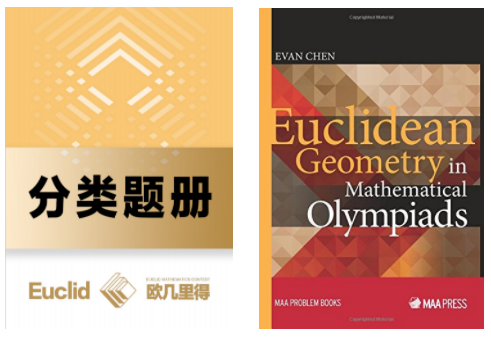
Categorized Exercise Book + Competition Prep Book

推荐

Online Customer Service
Contact Customer Service