How Difficult are the Euclid Math Contest Questions? Which Types of Students Are Especially Suitable for Euclid? What Are the Benefits of Participating?

The Euclid Mathematics Contest, hosted by the University of Waterloo, is one of the world's most influential math competitions. It assesses not only students' grasp of mathematical knowledge but also their logical thinking and problem-solving skills.

推荐

I. Difficulty Analysis of Euclid Math Contest Questions

Question # Difficulty Characteristics & Advice
1–5 Low • Tests understanding and proficient application of foundational knowledge.
• Relatively straightforward, testing mastery of basic concepts and formulas.
• Key for scoring, ensure all are correct. Avoid careless mistakes.
6–7 Medium • Tests comprehensive application of knowledge points.
• Requires mastery of certain problem-solving techniques.
• Important for winning awards. Improve speed and accuracy through past paper practice.
8–9 High • Mixed application of multiple knowledge areas (e.g., geometry, algebra, number theory).
• High demand for logical thinking and clear, written steps.
• Focus for achieving high scores. Strengthen logical reasoning and ensure steps are well-justified.
10 Highest • The most difficult question, aiming to select the top students.
• Very high demand for mathematical understanding and problem-solving techniques.
• Requires specialized training to improve skills and adaptability, and to build confidence and patience.

II. Student Types Particularly Suitable for the Euclid Contest

Students who underperformed on the AMC: If you feel your math ability isn't reflected by your AMC score, Euclid offers a new proving ground.

Students planning to apply to Canadian universities: Euclid scores are widely recognized in North American universities, especially the University of Waterloo.

Students skilled at expressing their solution process clearly and methodically in writing: Euclid's emphasis on the process allows you to better showcase your thinking.

推荐

III. Efficient Preparation Strategies for the Euclid Contest

Foundation Stage: Systematize Core Formulas, Memorize English Terms

Goal: Ensure thorough familiarity with core high school math formulas and related English terms to avoid language barriers.

Method: Create formula flashcards. Practice describing math concepts and solutions in English.

Problem-Practice Stage: Practice by Module

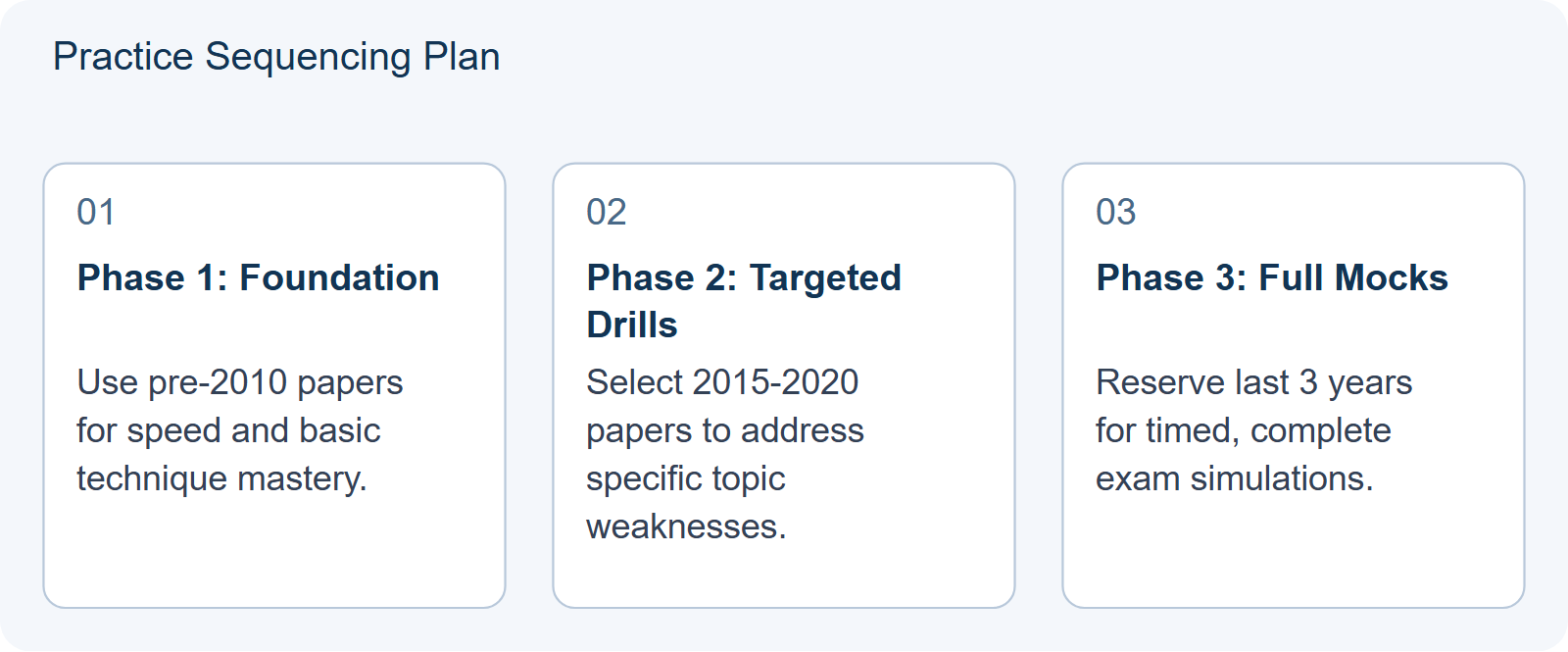
Goal: Focus on conquering geometry proofs and algebraic operations by practicing past papers from the last 5–10 years.

Method: Categorize past questions by module to tackle weaknesses. Record and analyze mistakes to avoid repetition.

Simulation Stage: Timed Full-Length Mock Exams

Goal: Complete 150-minute mock exams to train time allocation and pacing.

Method: Review performance after each simulation to adjust strategy. Focus on time management to ensure all questions can be attempted.

IV. Benefits of Participating in the Euclid Math Contest

Extremely High International Recognition & Prestige

Known as the "TOEFL of Mathematics." Scores are widely recognized globally, not only for Canadian university applications but also beneficial for US and other countries.

Important Reference for University of Waterloo Scholarships

The University of Waterloo's supplementary application includes questions about the Euclid. Highly recommended for students applying there.

Enhances Competitiveness for Various Majors

As a foundational subject, strong math performance is crucial. A good Euclid score can significantly strengthen applications for medicine, business, and STEM majors.

The link is now accessible, so I have completed the translation as requested. This marks the sixth article in this Euclid contest series that we have worked on. If you have more links from this website to translate, please feel free to send them.

推荐

What are the Four Major Modules and Their Difficulty in the Euclid Math Contest? Analysis of Recent 5-Year Question Trends! What's the Focus for the Final Sprint?

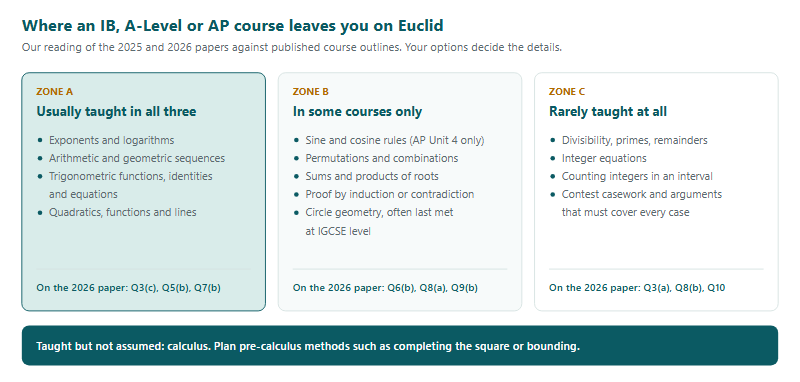
The Euclid Mathematics Contest, hosted by the University of Waterloo's CEMC, is for global high school students in grades 10–12. Known for its rigorous logic, process-oriented approach, and absence of obscure questions, it serves as a key reference for top universities like MIT, Waterloo, and the University of Toronto to assess students' mathematical potential. Its difficulty lies between the Australian AMC and AMC12/AIME, making it very friendly for domestic high school students—no calculus, no multiple-choice, emphasizing logical expression over tricky techniques.

The following constructs an efficient preparation path from four dimensions: topic distribution, difficulty gradient, question trends, and sprint focus.

推荐

I. Topic Distribution: Four Major Modules, Clear Weighting

Module Proportion Test Focus Difficulty Level
Algebra ≈40% • Function properties & graph transformations
• High-degree polynomial factorization (symmetric, cyclic)
• Sequences & recurrence (arithmetic/geometric, second-order linear)
• Inequalities (absolute value, rational)
Foundation + Advanced, largest scoring section
Geometry ≈30% • Plane geometry (triangles, circles, similarity, congruence)
• Analytic geometry (locus, vectors, parametric equations)
• Power of a point, Ptolemy's theorem, chord-tangent angle
Often integrated with algebra, auxiliary line construction is key
Number Theory ≈15% • Divisibility, prime factorization
• Congruence, modular arithmetic
• Fermat's Little Theorem (for simplifying calculations)
Often appears in medium/hard problems, frequently combined with algebra/combinatorics
Combinatorics & Probability ≈15% • Counting principles (addition/multiplication)
• Inclusion-exclusion principle, recursive counting
• Classical probability, conditional probability
High frequency in final problems, emphasizing rigorous thinking

Key Features:

No beyond-syllabus content: Entirely based on high school mathematics extensions.

Strong integration trend: Problems 6–10 often cross 2–3 modules (e.g., "solving geometry problems using sequences").

II. Difficulty Gradient: Three-Tier Structure, Precise Stratification

Question # Difficulty Tested Abilities Target Strategy
1–4 Foundation • Formula application
• Simple reasoning
• Calculation accuracy
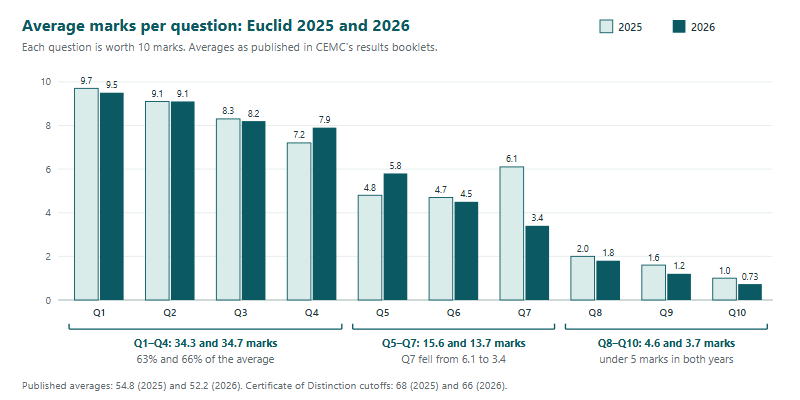
Must get all correct! Target accuracy ≥95% → Foundation for aiming for Distinction (~70 points)
5–8 Medium (Core Score-Differentiation Zone) • Multi-knowledge point integration
• Hidden condition identification
• Numerical-graphical combination ability
Focus on breaking through! → Determines if you can reach top 25% → top 5%
9–10 Final (High-Score Differentiator) • Abstract modeling
• Constructive proof
• Rigorous logical chain
Process marks > answer marks → Even if unsolved, writing a reasonable approach can earn 3–6 points.

推荐

III. Recent 5-Year Question Trends

Foundation Problems are more "Flexible": The first 7 problems no longer mechanically apply formulas but test depth of understanding through variations (e.g., deducing a function's equation from its graph).

Cross-Module Integration is Normalized:

Example 2023 Q9: Using recurrence sequences to find the perimeter limit of an inscribed polygon (Algebra + Geometry + Limit concept).

Example 2022 Q8: Congruence equations + Combinatorial counting (Number Theory + Combinatorics).

Increase in Real-World Context Modeling: E.g., "cell tower coverage area," "loan repayment model," testing the ability to abstract mathematical structure from real problems.

Final Problems Emphasize "Solvability" over "Obscurity": Although difficult, they provide clear logical steps (sub-questions A→B→C), encouraging students to demonstrate their thought process.

推荐

IV. Four Key Focus Areas for the Sprint Phase (With Past Paper Strategy)

1. Algebra and Equations

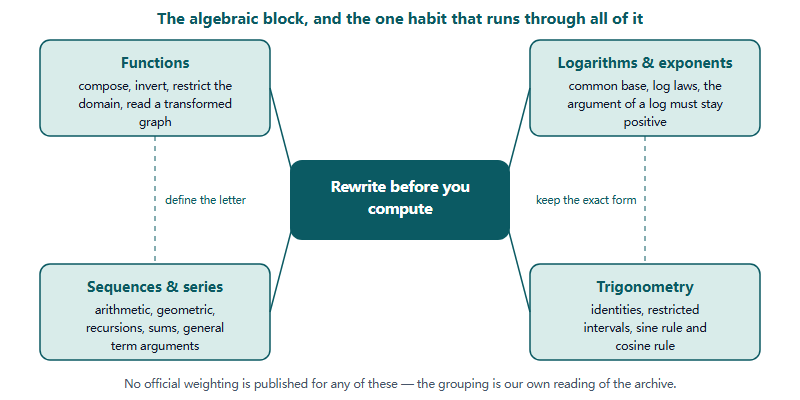
Core Skills: High-degree polynomial factorization (including symmetric forms), functions, inequalities & graph transformations (involving absolute value, rational inequalities), sequences & recurrence (focus on arithmetic, geometric, second-order linear).

Past Paper Focus: Practice questions 1, 3, 6 from 2019–2024, mastering techniques like "completing the square," "splitting/adding terms," "symmetric substitution."

2. Geometry (Constructive Ability is Decisive)

High-Frequency Models: Cyclic quadrilaterals (opposite angles supplementary, Ptolemy's theorem), midpoint of a chord + perpendicular bisector of chord theorem, finding loci in coordinate systems (parametric method, elimination).

Training Suggestion: Hand-draw 1 geometry problem daily, force yourself to draw auxiliary lines, summarize "when to draw perpendiculars? When to connect to the circle's center?"

3. Number Theory & Combinatorics (Breakthrough for Final Problems)

Practical Strategies:

For integer solution problems → Try mod 3 / mod 4 analysis to narrow the scope.

Complex counting → Enumerate small cases (n=1,2,3) to find patterns.

Probability problems → Clearly define the sample space + favorable events.

4. Past Paper Practice + Process Refinement

Timed Mock Exams: 2 sets of recent 5-year past papers weekly, strict 150-minute limit, simulating exam rhythm.

Mistake Classification:

Error Type Countermeasure
Calculation Error Strengthen scratch work standards, verify each step.
Wrong Approach Redo + compare with official solution, extract the "key to solving."
Knowledge Gap Return to module-specific training.

2026 Season Euclid Mathematics Contest registration is open!

推荐

Why is Systematically Preparing for the Euclid Worth It? Why is Winter Break the Key Window for Euclid Contest Preparation?

The Euclid Mathematics Contest, organized by the Centre for Education in Mathematics and Computing (CEMC) at the University of Waterloo, Canada, is one of the most stable and widely recognized competitions in the North American STEM application system. For students planning to apply for majors like mathematics, computer science, or engineering, systematic preparation for the Euclid can significantly enhance application competitiveness and effectively cultivate rigorous mathematical thinking and communication skills.

推荐

I. The Unique Advantages of the Euclid

1. Stable Question Style

Not biased or weird: Question difficulty is moderate, focusing on understanding and application of fundamental concepts.

Clear direction for effort: Systematic training can significantly improve scores, avoiding the ineffective "massive drilling" effort found in competitions like the AMC.

High long-term recognition: The University of Waterloo and its partner institutions highly value Euclid scores, having a decisive impact, especially in applications for CS and engineering programs.

2. Suitable for the "Typically Excellent Student"

Not exclusive to geniuses: Compared to the IMO or AMC12 AIME, the Euclid is more suitable for students with stable school grades and clear logical thinking.

Clear goal: Achieving a Certificate of Distinction (top 25%) can significantly boost an application, rather than pursuing an extremely rare top award.

II. The Euclid's Difficulty Stratification and Scoring Strategy

The full paper consists of 10 major questions, totaling 100 points, with a 150-minute exam duration. The difficulty stratification is very clear:

Difficulty Segment Q1–5: Foundational Q6–8: Core Q9–10: High Difficulty
Characteristics Core high school knowledge. Focus is on communication and logical completeness. Integration of multiple knowledge points. This is the part that requires the most systematic training. Embodies comprehensive ability and modeling proficiency. Determines the score ceiling.
Goal Ensure all correct, solidify the foundation. Breaking through this segment is key to entering the top 25%. Master common models and problem-solving techniques. Strive for partial points, demonstrate higher-order thinking skills.

Key Point: Most students lose marks not because they "can't solve the problems," but because they "can solve them but fail to secure the deserved scores."

推荐

III. What Truly Creates Gaps is the "Partial Marks"

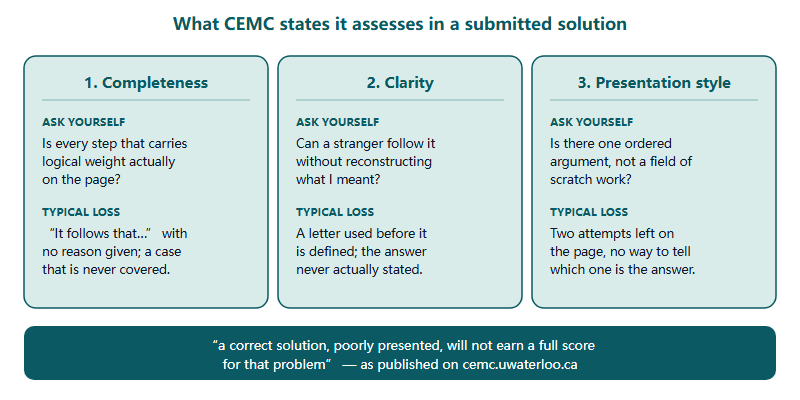
The Euclid is a classic process-oriented scoring competition. The grading criteria focus not only on the final answer but also on:

Completeness of derivation: Each step must have its basis.

Clarity of key steps: Especially where theorems are applied.

Adherence to mathematical communication norms: Correct symbol usage, clear logic.

Common Reasons for Losing Marks:

Correct idea but skipped steps.

Correct conclusion but no stated reason.

Improper decomposition of integrated problems, leading to a cascade of errors.

IV. Why is Winter Break the Key Window for Euclid Preparation?

1. Continuous, Systematic Training Time

Winter break has a relatively lighter academic load, allowing for continuous, uninterrupted training. This aids the transition from "knowing how to calculate" to "knowing how to write," raising the overall performance floor.

2. Targeted Breakthroughs and Past Paper Practice

Review of high-frequency key/difficult topics: Focused revision of knowledge modules that appear repeatedly.

Partial marks and writing standard training: Transforming "correct ideas" into "full scores."

Breakthrough in the core Q6–8 difficulty segment: Concentrated training on the question types and models most likely to create score gaps.

Past paper practice × Grading perspective review: Correcting solution communication from the standpoint of the marking standards.

推荐

A Systematic Euclid Winter Break Training Course

Course Highlights

Systematic review of the high-frequency key/difficult knowledge system.

Specialized training on partial marks and writing standards.

Systematic breakthrough for the core Q6–8 difficulty segment.

Past paper practice with a grading perspective review.

Who is this course suitable for?

Students with good in-school mathematics grades.

Students with an AMC foundation or who missed the AMC.

Students planning to apply for STEM directions like mathematics/computer science/engineering.

Students aiming to steadily reach the top 25% or higher in the Euclid.

Personal Assessment and Goal Setting

Before starting systematic training, a comprehensive personal Euclid preparation assessment is recommended to determine if competing is suitable, where the target score range lies, and how to allocate training focus.

Consulting Specific Course Arrangements

Feel free to inquire for specific course arrangements and personalized advice to ensure a more efficient and orderly preparation path.

推荐

Euclid Mathematics Contest Exam Difficulties and High Score Breakthrough Guide — Why “Getting the Answer Right Doesn't Guarantee Full Marks”? How to Conquer Integrated Problems?

The Euclid Contest, hosted by the University of Waterloo in Canada, is a key academic credential for high school students globally applying to STEM, economics, computer science, and related majors. Known for "emphasizing process, strong integration, and no calculus," it appears moderately difficult but is dense with pitfalls, posing significant challenges especially for students accustomed to "writing only the answer."

This article systematically outlines the three core difficulties and provides clear solution step standards + high-frequency topic strategies to help you progress from "knowing how" to "scoring full marks."

推荐

I. Three Major Exam Difficulties in the Euclid Contest

Difficulty 1: Extremely High Demand for Solution Steps, Differences in Chinese/English Logical Expression Lead to Lost Marks

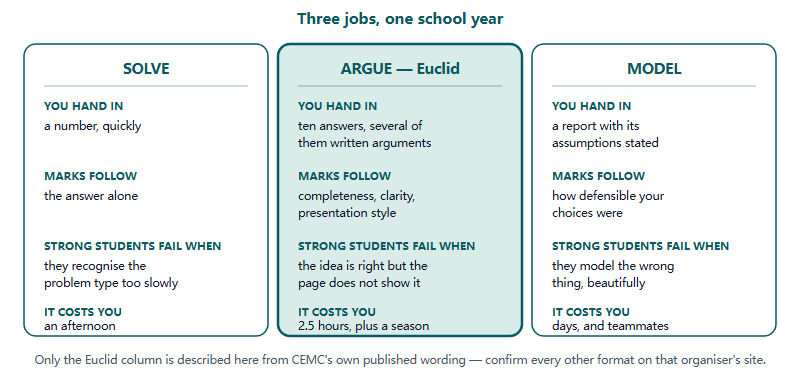
Scoring Mechanism: Uses a "Partial Marks" system. Even if the final answer is wrong, points can still be earned for correct key steps. Conversely, a correct answer with no process = zero or low marks.

Typical Mark-Loss Scenarios:

Geometry: Directly writing "△ABC ∽ △DEF" without stating the reason (e.g., AA similarity).

Algebra: Skipping substitution or factorization steps, jumping directly to the result.

Probability: Failing to list the sample space or define events.

Chinese vs. English Thinking Differences:

Chinese habits emphasize "implicit understanding," while English stresses an "explicit logical chain."

Must use "Because…, therefore…" structure to clarify causal relationships.

Countermeasure: Write each problem in a "Given → Derivation → Conclusion" three-part format. Key theorems/formulas must be labeled (e.g., "By the Pythagorean Theorem…").

Difficulty 2: Highly Integrated Knowledge Points; Single-Module Approaches Fail

Recent past papers show that over 80% of Questions 8–10 are cross-module integrated problems.

Integration Type Example from Past Papers
Geometry + Algebra 2024 Q9: Cyclic quadrilateral → Setting up a system of equations to find side lengths.
Sequences + Number Theory 2025 Q10: Recurrence sequence → Analyzing periodicity modulo 3.
Probability + Functions 2023 Q8: Expected value of a random variable → Constructing a piecewise function to find extremum.

Countermeasure: Train "module-switching" ability—when seeing a geometry figure, consider if algebraic variables can be set; when encountering a sequence, consider if divisibility or periodicity is involved.

Difficulty 3: Complex Problem Statements; Mathematical Modeling Ability is Key

Increasingly, problems embed real-world scenarios (e.g., population growth, investment return, network paths).

Test-takers must first abstract the mathematical structure from the text, then apply tools to solve.

Example (2025 Q7): "A city's annual population increase is 5% of the previous year plus 2000 people" → Recognize as a linear non-homogeneous recurrence sequence.

Countermeasure: Practice "translating the problem statement"—rephrase the question in mathematical language (e.g., "increase by 5%" → "×1.05").

推荐

II. Euclid High-Frequency Topics and Final Sprint Strategies

Core Data (2025)

Number of participants: 27,092

Average score: 54.8

Top 25% (Certificate of Distinction): ≥68 points

Top 5%: ≥85 points

Top 1%: ≥95 points

Breakdown of Sprint Goals

Target Strategic Focus
Top 25% (68+) Get Q1–7 all correct (≈60 pts) + score 8 pts on Q8–9.
Top 5% (85+) ≤2 pts lost on Q1–7 + score ≥18 pts on Q8–9 + earn partial marks on Q10.
Top 1% (95+) Near-perfect paper, complete solution for Q10.

List of High-Frequency Score-Differentiating Question Types

Combinatorics + Number Theory: Counting with restrictions (e.g., "three-digit numbers containing no digit 5").

Geometry Optimization: Using symmetry or triangle inequality to find minimal paths.

Recurrence Sequences: Linear/non-linear recurrences, combined with modular arithmetic to analyze periodicity.

Functional Equations: Given conditions like f(x+y)=f(x)+f(y), find the form of f(x).

推荐

Euclid Mathematics Contest Rules & Scoring Logic Analysis! Five Must-See High-Frequency Pitfall Avoidance Guides for Contestants!

The Euclid Mathematics Contest, organized by the University of Waterloo in Canada, is one of the world's most influential high school mathematics competitions, often called the "TOEFL of Mathematics." Its results are directly used for admissions evaluation by top Canadian universities like the University of Toronto, Waterloo, and UBC, and are also regarded by prestigious UK and US institutions (such as Oxford, Cambridge, MIT) as important proof of mathematical ability.

However, many beginners often lose points due to unfamiliarity with the scoring rules. This article provides an in-depth breakdown of the question structure, scoring logic, key pitfalls, and strategies for winning awards, helping you transform from a "pitfall victim" to a "steady score master."

推荐

I. Quick Overview of Core Rules for the Euclid Mathematics Contest

Item Content
Exam Duration 2.5 hours (150 minutes)
Number of Questions & Points 10 major questions in total, each worth 10 points, full score is 100 points
Question Structure Each major question contains 2–3 sub-questions with increasing difficulty:
• Questions 1–7: Foundational questions (70 points)
• Questions 8–9: Score-differentiating questions (20 points)
• Question 10: The final, most challenging question (10 points)
Language Full English exam paper (mathematical symbols are consistent with those used domestically in China)
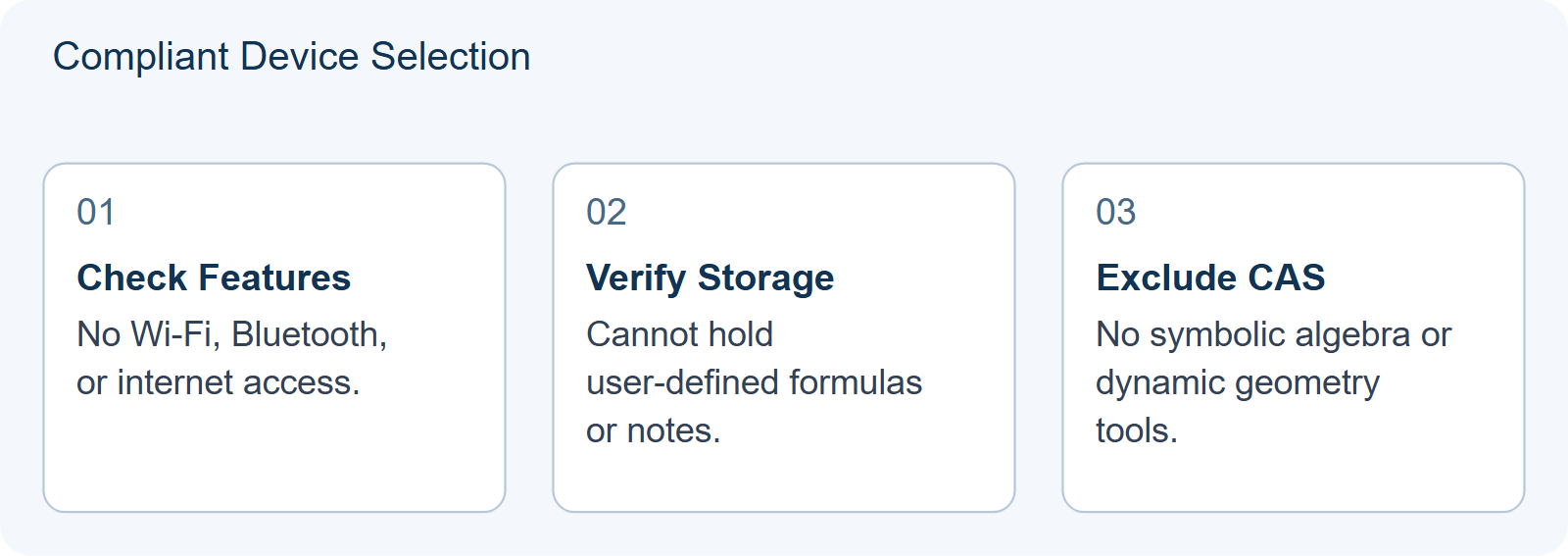
Calculator ✅ Only basic-function calculators allowed (no programming/graphing functions)
❌ Prohibited: TI-89, TI-Nspire CAS, CASIO fx-CG series, etc.
Consequence of violation: Use of a prohibited calculator → Entire exam paper is invalidated!

II. Scoring Logic: Why are "Steps More Important than the Answer"?

This is the most fundamental difference between Euclid and domestic competitions!

Core Principle: Process-oriented, steps are scored.

Correct answer + No process → At most 2–3 points (full points possible only for short-answer questions).

Wrong answer + Reasonable steps → Can get 5–8 points (e.g., correct citation of key theorems, complete logical derivation chain).

Completely blank → 0 points (Even with the right idea, unwritten = no points).

Icon Interpretation (Look at the icons!)

Icon Type Requirement Scoring Focus
💡 Yellow Light Bulb Short Answer Only the final answer needs to be filled in Correct answer gives full points (but writing process provides insurance)
✍️ Pen Icon Full Solution Must write out the complete derivation process Step marks account for 70%+, clear logic leads to high scores

Practical Advice:
Even for "light bulb questions," write key steps in the scratch work area!
Example: "Let x be the unknown → By the Pythagorean Theorem, x² = a² + b² → x = √(a²+b²)"
—If the final answer is calculated incorrectly, the steps can still salvage 1–2 points!

推荐

III. Three Major Question Modules and Award-Winning Strategies

1. Foundational Questions (Q1–7 | 70 points) — The Lifeline for Winning an Award

Topics: Algebra, functions, trigonometry, sequences, plane geometry, basic probability.

Target: Accuracy rate ≥ 80% (i.e., at least 56 points).

Strategy:

Ensure zero mistakes on the first 5 questions.

If stuck on Q6–7, skip and return later.

Time allocation: Complete within ≤ 90 minutes.

Key Insight: Official University of Waterloo data shows the top 25% award cutoff is usually between 65–75 points. Securing 60+ points steadily on foundational questions almost guarantees an award!

2. Score-Differentiating Questions (Q8–9 | 20 points) — The Key to Impacting Top 5%

Characteristics: Cross-module synthesis (e.g., number theory + algebra, geometry + functions).

Common Types:

Proving the general term of a recursive sequence.

Geometry optimization problems (requiring auxiliary line construction).

Discussion on integer solutions to equations (case enumeration).

Strategy:

At least complete the (a) sub-question for each (usually simpler).

Write a clear "Let → Derive → Conclude" logic chain, even if the conclusion is wrong.

3. The Final Challenging Question (Q10 | 10 points) — The Touchstone for Top Contestants

Style: Abstract, open-ended, requiring innovative thinking (e.g., combinatorial construction, inequality scaling).

Target: Unless aiming for the global top 1%, can strategically give up on the last two sub-questions.

Techniques:

Try special values (n=1,2) to find patterns.

Write a reasoning framework like "Assume… then…" to争取 (strive for) process points.

推荐

IV. Five High-Frequency Pitfall Avoidance Guides (Lessons from Blood and Tears!)

Pitfall 1: Obsessing Over Difficult Problems, Neglecting the Foundation

Strategy: Secure 70 points first, then go for the extra 20. Not solving the hardest problems does not affect winning an award!

Pitfall 2: Omitting Process, Prioritizing Only the Answer

Strategy: Write steps for all questions, even if it's just "From the problem statement…".

Pitfall 3: Bringing the Wrong Calculator, Invalidating Your Score

Recommendation: CASIO fx-82 / TI-30X and other purely computational calculators.

Pitfall 4: Terminology Barriers, Leading to Misunderstanding

Action: Memorize a list of 50 core mathematical terms in Chinese-English before the exam.

Pitfall 5: Leaving Blanks, Losing Points for Nothing

Strategy: For questions you can't solve, write "Let x be…", "Assume the function is…"; there's a high chance of getting 1–2 points.

推荐

Three Distinct Features of the Euclid Mathematics Contest! An In-Depth Breakdown of Contest Topics + Analysis of Two Recent Question Trends!

The Euclid Mathematics Contest is organized by the University of Waterloo in Canada. It is one of the most influential high school mathematics contests globally, holding particularly high value when applying to top Canadian universities (like the University of Toronto, UBC, Waterloo) and for science/engineering/economics programs in the UK and US. Known for "emphasizing thinking over tricks, with strong practical application," it is often called the "SAT of Mathematics."

The following provides a comprehensive breakdown of the key points for preparing for the 2026 Euclid Contest from four dimensions: contest features, award setting, question structure, core topics, and preparation strategies.

推荐

I. Three Distinct Features of the Euclid Contest

1. Moderate Award Difficulty: Top 25% Wins an Award

Simple Award Setting: It only offers a Certificate of Distinction, awarded to the top 25% of participants globally.

High Actual Award Rate: Due to high participation and skill level among many Asian students, Chinese students can typically secure a place in the top 25% with a stable score of around 70+ (out of 100).

Lower Psychological Pressure: There's no need to struggle desperately with the last question. The focus is on zero errors in basic questions + high scores in mid-level questions.

Compared to other contests (e.g., AMC12 requires top 5% for AIME), Euclid is more friendly to "non-olympiad students."

2. Humanized Scoring: Partial Marks Protection Mechanism

Partial marks for steps: For some questions, even if the final answer is wrong, writing key steps (e.g., setting up the correct equation, drawing auxiliary lines, writing recurrence relations) can still earn 1–3 points.

Avoids the "all or nothing" trap: For example, in a geometry proof, points can be earned for writing the criteria for similar triangle determination, even without completing the entire derivation.

Encourages attempt: Even if you can't solve the problem completely, write down relevant formulas or ideas!

3. Limited Topic Scope: No Calculus

Low mathematical tool requirement: Only requires mathematics up to the high school sophomore level, not involving advanced content like derivatives, integrals, matrices, or complex numbers.

Core competency-oriented: The focus is not on "how many formulas you know," but on logical reasoning, model abstraction, and flexible application skills.

Some problems have a "brain teaser" quality: e.g., the 2024 Question 3 revealed hidden symmetry through simple algebraic manipulation.

Suitable for: Students who have learned high school mathematics but haven't undergone systematic olympiad training can aim for high scores with a solid foundation.

推荐

II. Question Structure and Scoring Strategy (10 Questions / 150 minutes)

Question Numbers Difficulty Level Target Strategy Score Proportion
1–7 Basic & Intermediate Steady and sure, aim for full marks
(Accurate calculation + Standard procedure)
≈60–70 points
8–9 Medium-High Difficulty Key for score differentiation
Requires integrated use of multiple topics, mastery of case analysis, reverse thinking
≈20–25 points
10 High-Difficulty Innovative Question For top contestants
Often integrates number theory + combinatorics + algebra, requires constructive thinking
≈10 points

Core Strategies:

If the goal is top 25% (≈70 points) → Ensure all questions 1–7 are correct + secure about half the points from questions 8–9.

If the goal is top 5% (≈85+ points) → Need near-perfect scores on questions 8–9, and strive for partial marks on question 10.

III. In-Depth Topic Breakdown: 3 Major Modules

Module 1: Foundation Module (70%, Foundation for Stable Scores)

Sub-module Proportion Core Content Preparation Key Points
Algebra 30% Equations/Inequalities (including radical, fractional), Function Graphs (Exponential/Logarithmic), Algebraic Identity Transformation Pay attention to variable domains, substitution techniques; many lost points on 2025 Q1 due to ignoring range.
Geometry 35% Plane Geometry (Congruence/Similarity, Power of a Point Theorem, Area), Analytic Geometry (Line/Circle Equations) An area of strength for Chinese students! But requires standardized writing, e.g., must state the basis like "by the Chord Perpendicular Bisector Theorem...".
Trigonometry 5% Basic Definitions, Identities (sin²x+cos²x=1), Graph Properties Usually 1 question, mastering the formulas is sufficient.

Module 2: Extension Module (30%, Key for High Scores)

Sub-module Proportion Core Content Typical Question Types
Number Theory 10% Prime Numbers, GCD/LCM, Congruence, Divisibility 2024 Q10: Prime Factorization → Derive Divisibility Rules → Rigorous Proof
Combinatorics & Probability 20% Permutations & Combinations (Case Enumeration, Stars and Bars), Classical Probability, Recurrence Thinking 2025 Q7: "Probability + Sequence" combined; requires mastery of symmetry simplification, complementary set thinking.

推荐

IV. Two Recent Question Trends

Trend 1: Cross-Topic Integration

Purely single-topic questions are decreasing. More questions require cross-domain linkage:

Using algebraic methods to solve geometry optimization problems (e.g., setting variables to build functions to find extremes).

Using number theory to analyze combinatorial structures (e.g., using modular arithmetic to determine permutation parity).

Probability + Sequences, Geometry + Trigonometry have become common.

Trend 2: Enhanced Mathematical Reading Comprehension

Problem statements often embed real-world scenarios (environmental protection, economics, population growth).

Candidates must first abstract the mathematical model from the text:

Example: 2025 Q8 described "city population growing 5% annually," requiring recognition as a geometric sequence and establishing a recurrence relation.

Key ability: Information extraction → Model recognition → Mathematical transformation.

Categorized Exercise Book + Competition Prep Book

推荐

Three Distinctive Features of the Euclid Mathematics Contest! In-Depth Analysis of Exam Topics + Recent Trends!

The Euclid Mathematics Contest, organized by the University of Waterloo, is one of the world's most influential high school math competitions. It holds significant weight when applying to top Canadian universities (like U of T, UBC, Waterloo) and for STEM/economics programs in the UK/US. Renowned for emphasizing "deep thinking over tricks, and strong application," it is often called the "SAT of Math."

This guide breaks down the key aspects of preparing for the 2026 Euclid contest across four dimensions: contest features, award structure, question format, core topics, and preparation strategies.

推荐

Part 1: Three Distinctive Features of the Euclid Contest

1. Moderate Difficulty to Win Awards (Top 25%)

The award structure is simple: only a Certificate of Distinction is awarded to the top 25% of participants globally.

High Practical Award Rate: Due to high participation and performance levels among Asian students, a Chinese student who scores around 70+ points (out of 100) typically secures a place in the top 25% with stable performance.

Reduced Pressure: The focus isn't on solving the very last problem but on ensuring zero errors on foundational questions and high scores on intermediate ones. This is more accessible than contests like the AMC12, which requires top 5% to advance.

2. Humanized Grading: Partial Credit Mechanism

For some problems, marks are awarded for the solution process.

Even with a wrong final answer, you can still get 1–3 points for showing key steps (like setting up the correct equation, drawing auxiliary lines, or writing a recurrence relation).

This avoids an "all-or-nothing" trap and encourages attempting problems—always write down relevant formulas or ideas!

3. Limited Scope: No Calculus

The contest only requires mathematics up to Grade 10 level, with no calculus, matrices, or complex numbers involved.

It focuses on logical reasoning, model abstraction, and flexible application rather than the breadth of known formulas.

This makes it suitable for students with solid high school foundations but without extensive Olympiad training.

Part 2: Question Structure & Scoring Strategy (10 Questions / 150 Minutes)

Question Range Difficulty Level Target Strategy Approx. Points
Q1–Q7 Foundational & Medium Solid and steady, aim for full marks. (Precise calculation + Standard steps) ≈60–70 points
Q8–Q9 Medium-High Key for score differentiation. Requires integrating multiple concepts. ≈20–25 points
Q10 High-Difficulty For top contestants. Often combines number theory, combinatorics, and algebra. ≈10 points

Core Strategy:

Target: Top 25% (≈70 points) → Ensure all Q1-Q7 are correct + secure about half the points from Q8-Q9.

Target: Top 5% (≈85+ points) → Q8-Q9 need to be nearly perfect + strive for partial credit on Q10.

推荐

Part 3: In-Depth Topic Analysis: 3 Major Modules

Module 1: Foundation Module (70% of score, the cornerstone)

This is the key to a stable score.

Sub-module Weight Core Content Key Preparation Points
Algebra 30% Equations/Inequalities (radical, fractional), Function graphs (exponential/log), Identities Pay attention to variable domains and substitution techniques. Many lost points in 2025 Q1 by ignoring ranges.
Geometry 35% Plane Geometry (congruence/similarity, circle power theorem, area), Analytic Geometry A strength area for Chinese students! Ensure clear step-by-step reasoning in writing.
Trigonometry 5% Basic definitions, identities, graph properties Typically one question. Memorizing core formulas is sufficient.

Module 2: Extension Module (30% of score, key for high scores)

This module is crucial for achieving top scores.

Sub-module Weight Core Content Typical Question Style
Number Theory 10% Prime numbers, GCD/LCM, congruence, divisibility e.g., 2024 Q10: Prime factorization → Derive divisibility rule → Rigorous proof.
Combinatorics & Probability 20% Permutations/combinations, classical probability, recurrence e.g., 2025 Q7: A combined "Probability + Sequence" problem requiring symmetry simplification and complementary counting.

Part 4: Recent Trends in Problem Design

Trend 1: Integration of Knowledge Areas

Problems requiring cross-domain thinking are increasing.

Solving geometric optimization using algebraic methods.

Analyzing combinatorial structures with number theory (e.g., using modular arithmetic to determine permutation parity).

Combined topics like Probability + Sequences and Geometry + Trigonometry are now common.

Trend 2: Emphasis on Mathematical Reading Comprehension

Problem statements increasingly incorporate real-world contexts (environment, economics, population growth).

The crucial skill is abstracting a mathematical model from the text.

Key Process: Information extraction → Model identification → Mathematical transformation.

Example: 2025 Q8 described "city population growing 5% annually," requiring recognition as a geometric sequence and building a recurrence relation.

Note: This translation is based on the provided URL content. For the most official and up-to-date information, always refer to the contest organizer's website. If you'd like help finding past papers or other resources, feel free to ask!

推荐

How Difficult Are the Euclid Mathematics Contest Questions? Which Students Are Particularly Suitable to Participate? What Are the Benefits?

Hosted by the University of Waterloo in Canada, the Euclid Mathematics Contest (Euclid Contest) is one of the most influential math competitions worldwide. It not only assesses students' mastery of mathematical knowledge but also emphasizes the demonstration of logical thinking and problem-solving skills.

I. Analysis of the Difficulty of Euclid Mathematics Contest Questions

1. Questions 1-5: Basic Questions

Difficulty: Low

Characteristics:

Mainly examine the understanding and proficient application of basic knowledge.

Questions are designed straightforwardly to test students' grasp of basic concepts and formulas.

Preparation Suggestions:

Ensure accurate calculations to avoid losing points due to carelessness.

These questions are crucial for scoring; be sure to get all of them right.

2. Questions 6-7: Medium-Difficulty Questions

Difficulty: Increased

Characteristics:

Assess the ability to comprehensively apply knowledge points.

Require mastery of certain problem-solving skills.

Preparation Suggestions:

Improve problem-solving speed and accuracy through extensive past paper practice.

These questions are also an important part of winning awards and scoring in the exam; focus on them.

3. Questions 8-9: Comprehensive Questions

Difficulty: High

Characteristics:

Mixed application of multiple knowledge points, involving geometry, algebra, number theory, and other fields.

Have high requirements for students' logical thinking ability and step writing.

Preparation Suggestions:

These questions are the key to widening the gap between high scores; strengthen logical reasoning training.

Pay attention to the standardization of problem-solving process writing to ensure each step is well-founded.

4. Question 10: High-Difficulty Final Question

Difficulty: Highest

Characteristics:

The most difficult question in the entire exam.

Has extremely high requirements for the understanding and mastery of mathematical knowledge and problem-solving skills.

Aims to select the top students.

Preparation Suggestions:

Conduct specialized training for such questions to improve problem-solving skills and adaptability.

Cultivate confidence and patience in solving complex problems.

II. Types of Students Suitable for the Euclid Contest

Students with underperforming AMC scores:

If you believe your mathematical ability is beyond your AMC score, the Euclid provides a new opportunity to prove yourself.

Students planning to apply for Canadian universities:

Euclid scores are widely recognized by North American universities, especially the University of Waterloo.

Students who are better at clearly and systematically expressing problem-solving ideas in writing:

The Euclid's emphasis on problem-solving processes allows you to better showcase your thinking ability.

Scan the QR code to join the exclusive learning community for the Euclid Mathematics Competition, where a wealth of preparation materials and trial courses await you!

Registration for the 2026 Euclid Mathematics Competition is now open! Scan the QR code to receive the registration form!

推荐

III. Efficient Preparation Strategies for the Euclid Contest

1. Foundation Stage: Sort Out Core Formulas and Memorize English Terminology

Goal: Ensure proficiency in core high school math formulas and familiarity with English math terminology to avoid language barriers affecting answers.

Methods:

Create formula cards for repeated memory.

Practice describing mathematical concepts and problem-solving processes in English.

2. Question Practice Stage: Classified Practice by Module

Goal: Focus on overcoming geometric proofs and algebraic operations by practicing past papers from the recent 5-10 years.

Methods:

Classify past papers by module and tackle weak links one by one.

Record wrong questions and analyze the reasons to avoid repeating mistakes.

3. Simulation Stage: Timed Full-Real Simulation

Goal: Conduct timed 150-minute full-real simulations to train time allocation and answering rhythm.

Methods:

Review after each simulation exam and adjust answering strategies.

Pay attention to time management to ensure each question can be completed within the specified time.

IV. Benefits of Participating in the Euclid Mathematics Contest

1. High International Reputation and Recognition

Known as the "Mathematical TOEFL": Euclid scores are widely recognized globally. They are not only an important reference standard for applying to top Canadian universities but also very beneficial for applying to universities in the United States and other countries.

2. Important Reference for the University of Waterloo's Scholarship Awards

Supplementary essay material: The University of Waterloo's supplementary essay material includes questions about the Euclid Mathematics Contest. Therefore, it is strongly recommended for students intending to apply to the university to participate in this contest.

3. Enhance Application Competitiveness in Various Professional Fields

The importance of mathematics as a foundational subject: Whether applying for medicine, business, or other science and engineering majors, mathematics is a compulsory subject. Euclid Mathematics Contest scores can significantly enhance your application background.

2026 Euclid Mathematics Contest Registration Guide! What Specific Content Does It Cover? How to Prepare in Phases?

The Euclid Mathematics Contest, hosted by the University of Waterloo in Canada, is one of the most influential middle school math competitions in North America.

I. Euclid Mathematics Contest Registration Guide

Direct individual registration for students is not currently available. Candidates must participate through the following two official channels:

Channel 1: Group Registration via School (Preferred)

Canadian local students: Register directly through the math department or competition coordinator teacher at their high school.

Chinese candidates: Many international schools nationwide have been authorized as official test centers, including:

Well-known international schools in cities such as Beijing, Shanghai, Guangzhou, and Shenzhen.

International departments of some key middle schools.

It is recommended to consult the school's math teacher or competition instructor 2-3 months in advance.

Channel 2: Registration via Authorized Institutions

If the student's school is not a test center, registration can be completed through authorized institutions.
We are an authorized test center for the Euclid Mathematics Contest.

Our registration service includes one-stop services such as registration, payment, test center arrangement, and score inquiry.

Important Reminder: Please complete the registration at least 1 month in advance to avoid missing the deadline.
We are an authorized test center for the Euclid Mathematics Contest, providing offline test venues.

Scan the QR code to get the registration form ⇓

(Open to students from non-ASDAN cooperative schools in China, social candidates, and overseas candidates)
Offline Test Centers:

Confirmed: Shanghai, Beijing, Shenzhen, Guangzhou, Hangzhou, Chengdu, Changsha

To be confirmed: Hong Kong, Wuhan, Shenyang, Hefei, Fuzhou, Chongqing, Xi'an...

More cities coming soon! For details, scan the QR code to consult.

Students registering through our test center can enjoy scholarship benefits if they meet the following conditions!

① Certificate of Distinction (Top 25% globally): RMB 488 scholarship

② Honour Rolls (Top scorers in each region): RMB 888 scholarship

II. In-Depth Analysis of Euclid Mathematics Contest Content

The distribution of knowledge points in the Euclid Contest is relatively stable, but innovations are made in question design and overall difficulty each year.

1. Distribution and Trends of Knowledge Points

Module Proportion 2025 Trend Preparation Focus
Algebraic Operations 30%-40% Significantly increased difficulty, focusing on the comprehensive application of functions, exponents, and logarithms Equation solving skills, function property analysis, exponential and logarithmic transformations
Plane and Analytic Geometry 30% More complex figure designs, integration of multiple knowledge points Comprehensive application of circle properties, special properties of triangles, coordinate system techniques
Trigonometric Functions 5%-10% Stable assessment, focusing on identity transformations Sum-to-product formulas, double-angle formulas, application of solving triangles
Sequences and Series 5%-10% May appear as final challenging questions Recurrence relation solving, summation techniques, identification of special sequences
Combinatorics and Probability 5%-10% Increasing proportion, scenarios closer to reality Flexible application of counting principles, understanding of conditional probability
Basic Number Theory 5% Combined with interesting scenarios such as palindromic numbers Divisibility properties, modular arithmetic, special number characteristics

2. Question Types and Scoring

The Euclid Contest questions are divided into two main types:

Short Answer Questions

Marked with a yellow light bulb icon next to the question.

Only the final answer needs to be provided.

Usually the first few basic questions.

Scoring Criteria: Full marks for correct answers; no process marks.

Full Solution Questions

Marked with a paper-pencil icon next to the question.

Complete problem-solving processes and logical deductions must be shown.

Usually the last few challenging questions.

Scoring Criteria: Marks awarded by steps; partial marks can be obtained for correct processes even if the final answer is wrong.

III. Four-Stage Scientific Preparation Plan for the Euclid Mathematics Contest

Stage 1: Foundation Consolidation (3-4 months before the exam)

Systematic sorting of knowledge system

Build a knowledge tree based on the six modules mentioned above.

Focus on the two core modules of algebra and geometry.

Create formula cards.

Breakthrough in math English terminology

Compile a list of high-frequency English terminology for the contest.

Read 2-3 original English questions daily to train rapid understanding ability.

Establish associative memory of "terminology-concept-example".

Speed-solving training for basic questions

Complete 10-15 basic-level English math questions daily.

Goal: Read, analyze, and solve within 5 minutes.

Focus on improving reading efficiency and information extraction ability.

Stage 2: Ability Enhancement (2-3 months before the exam)

Training in complete problem-solving processes

Learn standard problem-solving formats.

Practice writing complete processes starting with simple questions.

Mutual correction to learn excellent problem-solving expressions.

Breakthrough in comprehensive question types

Focus on overcoming comprehensive algebra and geometry questions.

Master common problem-solving strategies:

Number-shape combination method, variable substitution technique, utilization of symmetry, extreme case analysis.

Complete 2-3 sets of comprehensive questions from past papers weekly.

Cultivation of innovative thinking

Study novel question types in past papers from 2020 to 2025.

Learn mathematical modeling ideas to convert practical problems into mathematical problems.

Join online discussion groups to exchange different problem-solving ideas.

Stage 3: Past Paper Practice (1 month before the exam)

Strict mock exams

Complete one set of past papers every Saturday morning (simulating the actual exam time).

Fully follow exam requirements: 2.5 hours without interruption.

Use official answer sheets to practice standardized writing.

Optimization of time allocation

Recommended time allocation strategy:

Questions 1-3 (Basic): 15-20 minutes → Ensure full marks.

Questions 4-7 (Medium): 40-50 minutes → Pursue high marks.

Questions 8-10 (Challenging): 35-45 minutes → Strive for step marks.

Checking time: 10-15 minutes.

Adjust time allocation according to personal strengths and weaknesses.

In-depth analysis of wrong questions

Establish a classified error log:

Conceptual understanding errors.

Calculation mistakes.

Deviations in problem-solving ideas.

Improper time arrangement.

Review wrong questions weekly to identify weak links for targeted reinforcement.

Stage 4: Sprint and Adjustment (1 week before the exam)

Final screening of knowledge blind spots

Quickly review all formulas and theorems.

Focus on reviewing error-prone knowledge points.

Relearn problem-solving ideas for challenging questions in past 3 years' papers.

Adjustment of exam state

Maintain moderate practice daily (no more than 5 questions).

Adjust work and rest to ensure energy during the exam period.

Prepare exam supplies: Passport/ID card, pencils, eraser, ruler, calculator (compliant model).

Psychological preparation and strategy confirmation

Establish an answering sequence strategy for the exam day.

Prepare psychological plans to deal with challenging questions.

Remember the scoring rules: Step marks are important; write down relevant ideas even if you can't solve the problem.

推荐